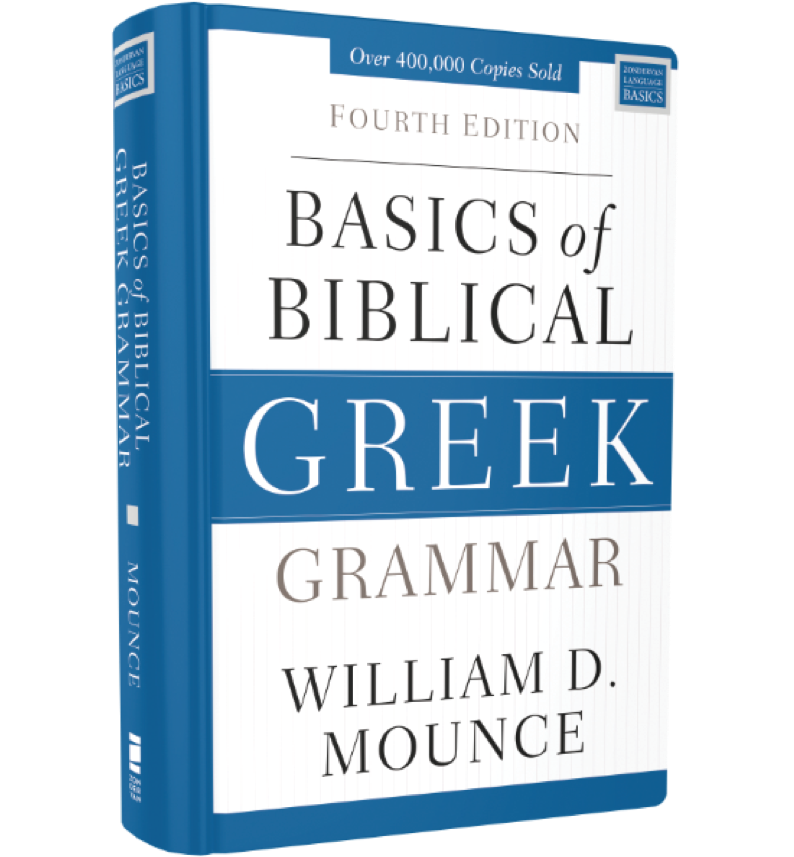
Mounce's Expository Dictionary
![]() |
If you want to know what the Greek and Hebrew words of the Bible mean, may I recommend my own book? The main dictionary discusses all significant Greek and Hebrew words, and is written at a level for the busy pastor and earnest Bible student. There are also two shorter but more exhaustive dictionaries of most Greek and Hebrew words. Read more ... |
Support BiblicalTraining.org (free)
Will you financially help the ministry of BiblicalTraining.org, even though it will not cost you a cent, and in fact can save money?
We have become a partner with ChristianBooks.com and Amazon.com. All you have to do is make your CBD and Amazon purchases through us, it costs you nothing additional, and we receive a referral fee for the ministry.
All you do is click on one of the links above, and shop as normal.
The reading lists show you recommendations for books in many different topics. If you click on any of the links, you can purchase the book at a discount, and Biblical Training receives a referral fee. You can start by clicking "Reading Lists" tab at the top of this page.
Bill and Bob's Blog
Subscribe to the blog to easily track new blog posts.
How Rude was Jesus?
Jesus is at the wedding at Cana, his mom sees a need, and asks Jesus (well, actually tells him) to help. Jesus’ response is,τι εμοι και σοι, γυναι; (Jn 2:4). Word for word, Jesus says, “What to me and to you, woman.”
The translations really dance around with this one. “Woman, what does this have to do with me?” (ESV). “Woman, why do you involve me?” (TNIV). “Woman, why are you saying this to me?” (NET, with the footnote, “The term Woman is Jesus’ normal, polite way of addressing women [Matt 15:28, Luke 13:12; John 4:21; 8:10; 19:26; 20:15]”). “Dear woman, that’s not our problem” (NLT).
γυνη is Greek for “woman” or “wife.” It is in the vocative case as Jesus addressing her directly. It is not nearly so abrupt in Greek as it sounds in English. It is the same form of the word Jesus uses when he tenderly comforts Mary Magdalene at the empty tomb (John 20:15).


